Engineering & TechnologyGeneralOlive Oil TechnologyNovember 3, 20260 Comments
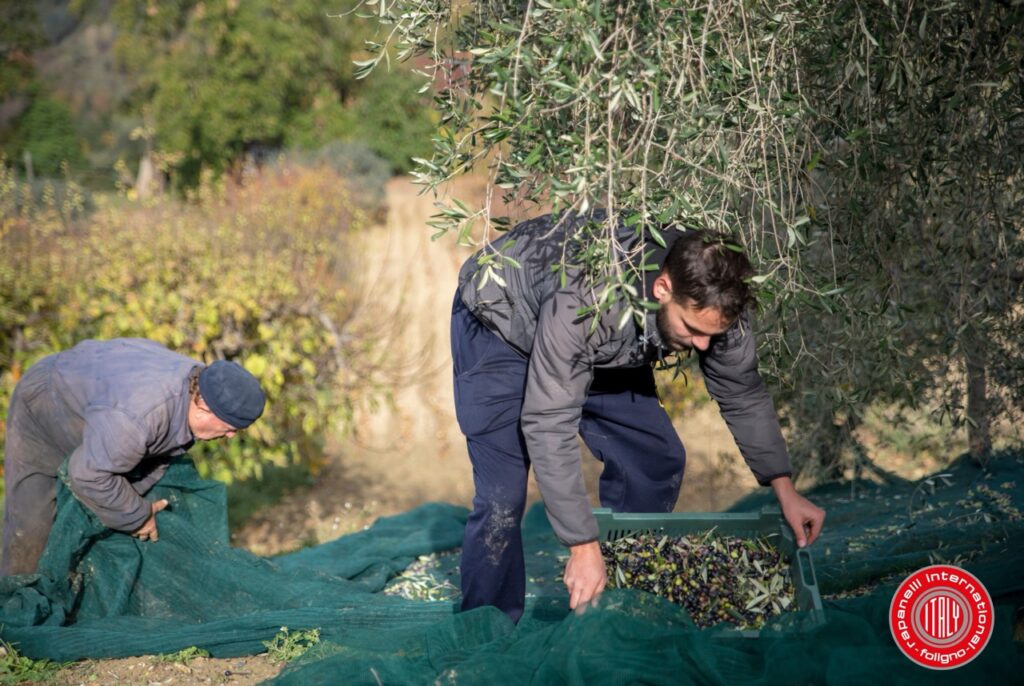
Every autumn, olive groves across Italy fill with activity. Nets are spread beneath the trees, crates begin to fill, and families and friends gather to help with the raccolta delle olive. When the work is done, the olives travel to the frantoio, where everyone waits for the new oil.
For professional growers, the harvest is one of the most important periods of the year. For families with a few trees, it may also be an annual reunion. Both are part of Italy’s olive-growing tradition.
A day in the olive groves
The day often starts by laying nets under the trees and deciding who will work where. As the olives come down, people gather them, move the nets and fill the crates. There is always another tree to reach, another crate to carry and someone calling for an extra pair of hands.
Methods vary with the size and location of the grove. Some olives are picked by hand; harvesting tools help with larger trees or a greater number of them. On steep or uneven land, even a small harvest can take considerable effort.
The work leaves room for conversation. Experienced relatives show younger ones how they do things. Friends who may not see each other often spend the day side by side. Lunch offers a welcome pause before everyone returns to the trees.
Many families know the history of their grove as well as the route through it. They remember who planted a tree, who cared for it and how the harvest was organised years ago. Each season adds another chapter to that shared history.

A visit to the frantoio
Once the olives have been gathered, the next stop is the frantoio. This is the moment many people have been looking forward to throughout the day.
Growers arrive with their fruit and talk about the season while they wait. How did the trees respond to the weather? Was the harvest easier or harder than expected? What will the new oil be like? During harvest season, the mill is also a place where neighbours and families meet.
For someone who has spent the day in the grove, seeing the olives become oil is especially satisfying. The first taste brings the whole experience together. That oil came from familiar trees and from a day of work shared with other people.

Good oil begins before the olives reach the mill
The condition of the fruit matters from the moment it is picked. Careful handling helps avoid damage, while ventilated containers and prompt processing help protect the olives on their way to the frantoio. Long delays, heat and damaged fruit can affect the quality of the resulting oil.
This is why growers and millers plan closely during the busiest weeks of the season. A mill needs to receive fruit efficiently and move it through the processing stages at a pace that matches the harvest. Our guide to choosing olive oil processing equipment explains how those stages fit together.
The first stages are especially important. Leaves, soil and stones need to be removed before the olives reach the crusher. Rapanelli’s LAVOLEA 2024 olive washing machine is designed for this part of the process.
From the olive grove to the bottle
Inoltrolio offers a close-to-home example of this journey. Created by Inoltra as a gift for clients, partners and friends, the extra virgin olive oil comes from hand-harvested olives in Umbria. It is produced using Rapanelli’s Sinolea® extraction system, which separates oil from the olive paste through percolation.
The bottle brings together the work in the grove and the decisions made at the frantoio. It also makes a fitting image for a story about why the harvest matters to the people who take part in it.

A tradition that continues
The tools used in the grove and the technology inside the frantoio have changed over time. The harvest still depends on people who understand the trees, care for the fruit and share what they know with the next generation.
At Rapanelli, olive oil extraction systems are developed for the work that begins long before the olives arrive at the mill. Every delivery represents a growing season and the effort of the people who brought it in.
Then comes the moment everyone has been waiting for: a piece of bread, a drizzle of new oil and the first taste of what they made together.